Laxmi Engineering is a leading manufacturer of high‑performance dyno mills and horizontal bead mills, designed for ultra‑fine wet grinding and dispersion of a wide range of materials. Our mills are engineered with precision to deliver superior particle size reduction, narrow distribution, and high throughput for demanding applications.
Built with advanced technology and wear‑resistant materials, our machines are ideal for processing paints, inks, coatings, pigments, agrochemicals, and other viscous suspensions. With a horizontal grinding chamber and high‑energy agitator system, they ensure efficient, continuous operation and consistent product quality.
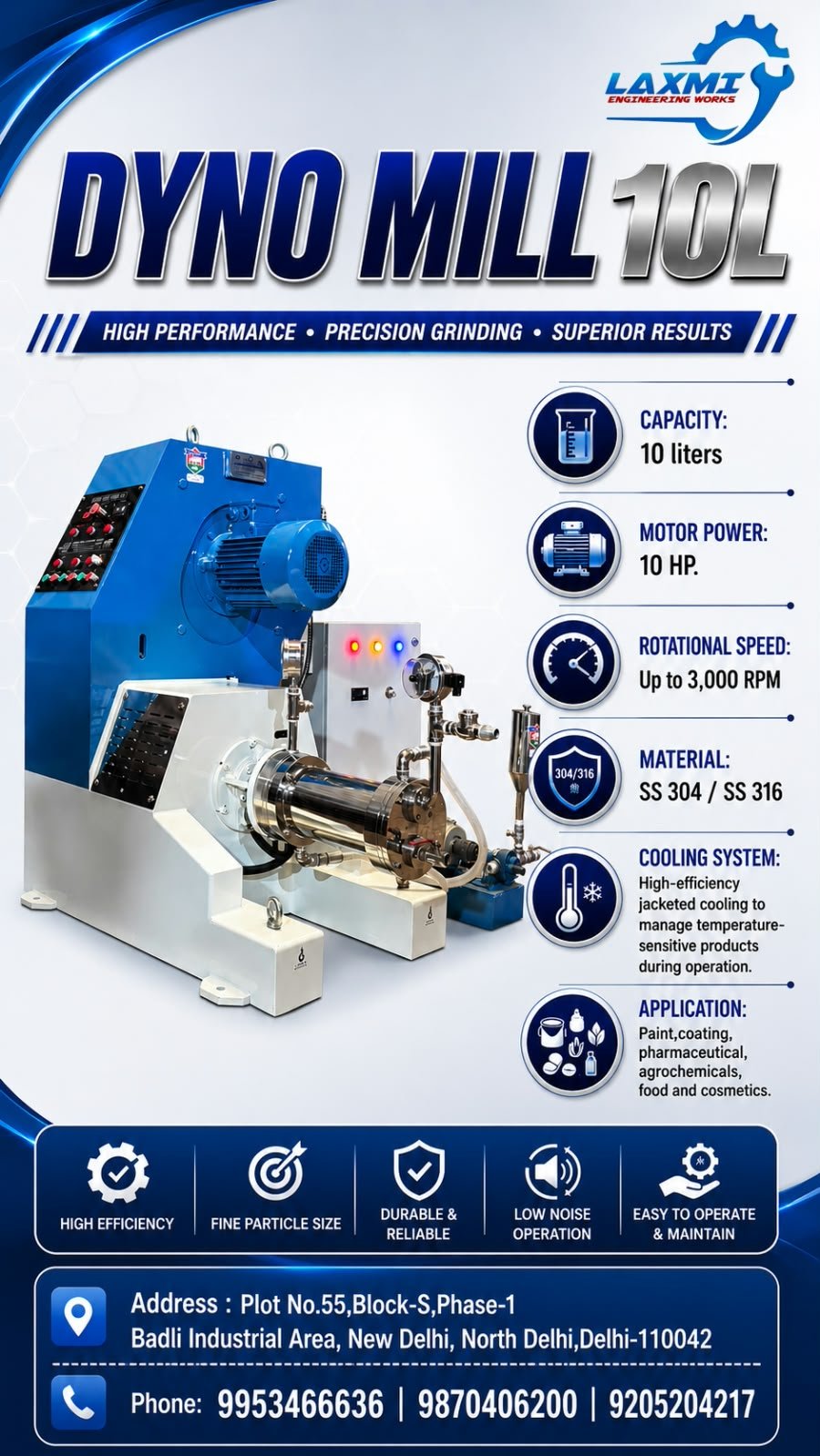
When it comes to selecting the right Dyno Mill or Horizontal Bead Mill, Laxmi Engineering Works stands out as the preferred partner for industries demanding precise wet grinding and dispersion solutions. Our commitment to quality and innovation ensures superior performance and reliability.
Our horizontal bead mills deliver exceptional fineness and narrow particle size distribution, thanks to advanced agitator designs and high‑energy milling chambers that maximize grinding efficiency.
Whether you need different chamber volumes, materials of construction, sealing options, or cooling systems, we offer tailored solutions to match your specific production needs.
Each machine undergoes strict quality control, including performance testing with your materials, to ensure consistent grinding results and long‑term operational reliability.
Our experienced team provides complete support, from process optimisation and installation to maintenance and troubleshooting, ensuring smooth operation throughout the machine's life.
Designed for energy efficiency and minimal wear, our mills reduce operating costs while maintaining high throughput and consistent product quality, giving you better returns on investment.
Incorporating the latest in milling technology, our machines feature intelligent control systems, easy‑to‑clean designs, and robust construction for demanding industrial environments.
Engineered for excellence, our dyno mills and horizontal bead mills are packed with features that ensure superior grinding performance, ease of operation, and long service life.
Advanced agitator and pin designs with optimized bead charge provide intense grinding action, achieving sub‑micron particle sizes in a short residence time.
Grinding chambers and agitators are fabricated from high‑grade wear‑resistant alloys, ensuring longevity even with abrasive slurries.
Integrated cooling jackets and optional chilled water systems maintain optimal temperature, preventing product degradation during grinding.
Quick‑release chamber covers, easy bead separation, and CIP‑compatible designs reduce downtime and simplify product changeovers.
PLC‑based controls with touch‑screen interface allow precise adjustment of speed, feed rate, and temperature, with data logging for batch traceability.
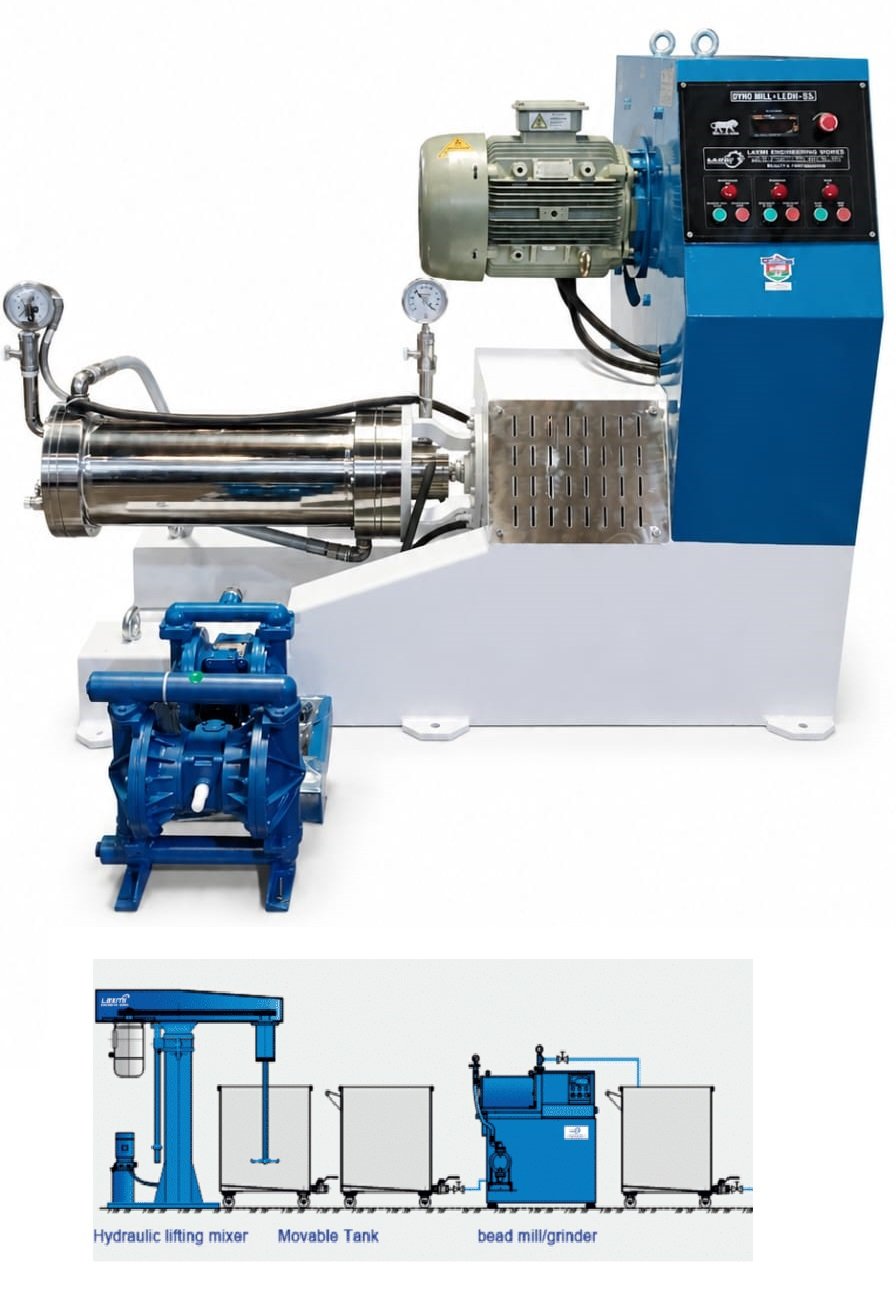
Laxmi Engineering dyno mills and horizontal bead mills are trusted across a wide range of industries for their versatility, efficiency, and ability to handle even the most challenging materials.
Fine dispersion of pigments, fillers, and additives for decorative, industrial, and automotive coatings.
Grinding of ink formulations for flexographic, gravure, and screen printing, ensuring consistent colour and viscosity.
Milling of pesticides, herbicides, and fungicides to achieve stable suspensions with optimal biological activity.
Wet grinding of active pharmaceutical ingredients (APIs) and excipients for nanoparticle formulations and controlled‑release systems.
Our dyno mills and horizontal bead mills are engineered with state‑of‑the‑art technology to deliver superior grinding performance, energy efficiency, and operational reliability.
Direct‑coupled motors with variable frequency drives optimise power consumption while maintaining high grinding intensity.
Optimised chamber geometry and bead packing ensure maximum product flow with minimal dwell time, increasing productivity.
Multi‑zone cooling jackets and internal water circulation effectively dissipate heat, allowing processing of heat‑sensitive materials.
Integrated sensors for temperature, pressure, and flow provide continuous feedback, ensuring consistent product quality and process stability.
 +91-9205204218
 hariom.lax@gmail.com